
DAY WITH(OUT) ART 2026: SEEDS IN A DYING COLONY
Screening and Panel Discussion
December 1, 2026 | Riverside Town Hall | 6–8 pm
27 Riverside Rd, Riverside IL
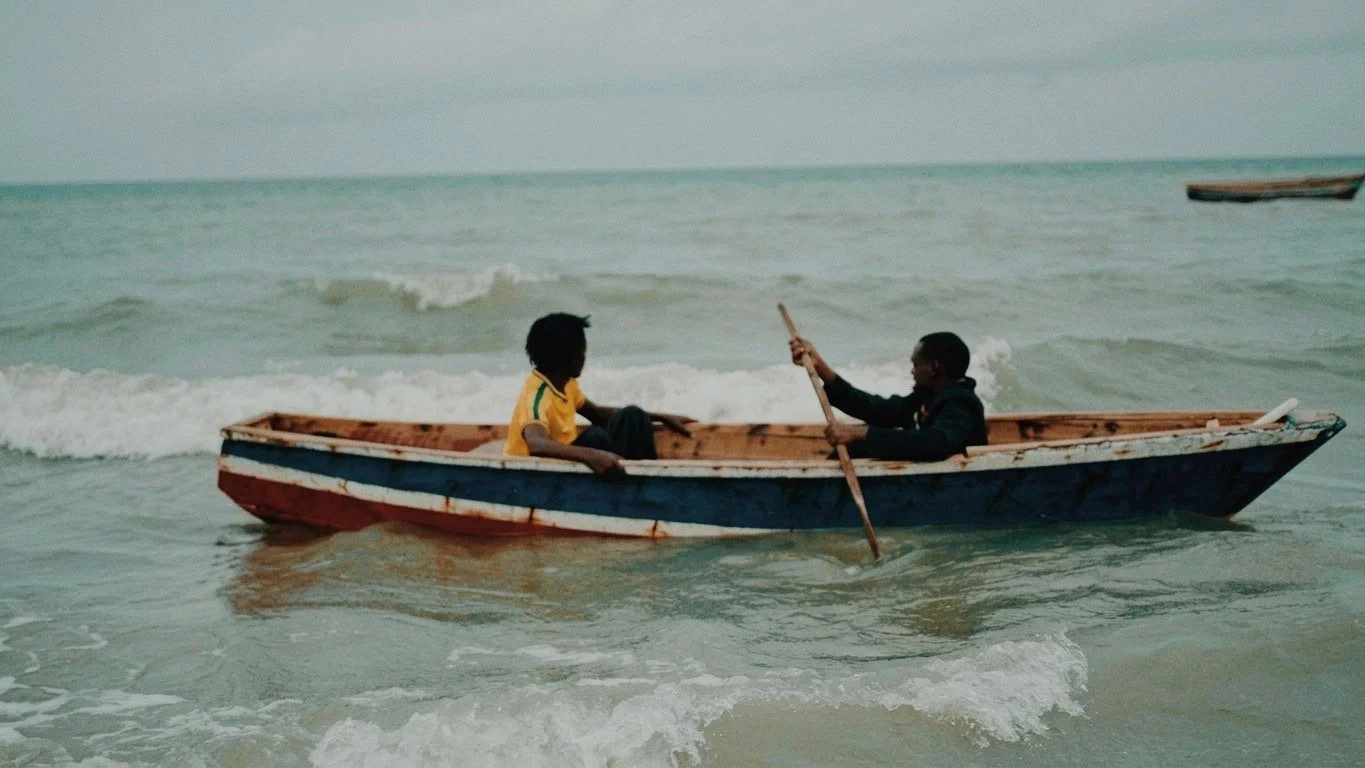
Edgar Hudson, There is an Elephant in the Room, 2026. Commissioned by Visual AIDS for seeds in a dying colony.
Riverside Arts Center is proud to partner with Visual AIDS for Day With(out) Art 2026 by presenting seeds in a dying colony, a program of four newly commissioned videos that move through the afterlives of colonialism and the ongoing HIV epidemic. Across fractured histories and landscapes marked by extraction, the works trace how systems of power shape the body, memory, and experiences of care.
Visual AIDS is a New York-based non-profit that utilizes art to fight AIDS by provoking dialogue, supporting HIV+ artists, and preserving a legacy, because AIDS is not over. Day With(out) Art is an initiative that brings contemporary visual art and film into conversation with the ongoing HIV/AIDS epidemic, using artists’ perspectives to raise awareness, preserve histories, and foreground the experiences of people living with HIV/AIDS.
The screening of seeds in a dying colony will take place at the auditorium of the Riverside Town Hall (27 Riverside Road) on December 1 at 6pm, followed by a panel discussion featuring artists Saumitra Chandratreya, David Lozano, Darryl DeAngelo Terrell, and Sam Kirk; HIV/AIDS scholar and historian Jennifer Brier; and Chris Balthazar of TaskForce Prevention and Community Services. The panelists will respond to the films and consider how HIV/AIDS continues to shape art, politics, culture, and everyday life.
The event is free and open to the public.
This screening takes place in conjunction with two exhibitions at Riverside Arts Center: Perpetual Archives and Perpetual Desires. Together, the exhibitions bring together artwork, community-based prevention services, archival ephemera, and other perspectives that explore the past and present of HIV/AIDS, as well as its ongoing implications for desire and intimacy.
Perpetual Archives will be on view at Riverside Town Hall, 27 Riverside Road, from November 16, 2026, through February 26, 2027. Perpetual Desires will open at the Freark Gallery on January 17 and remain on view through February 26, 2027.
Please join us on Sunday, January 17, from 3 to 6 pm for a joint reception for both exhibitions. Light refreshments will be served at the Riverside Arts Center.
PANELIST Biographies
Sam Kirk is a Chicago-based multidisciplinary artist who explores how identity is formed and revealed over time. Drawing from lived experience, memory, and community dialogue, her work examines moments of personal and collective transition, centering underrepresented stories and celebrating the beauty, resilience, and complexity of everyday life. Born and raised on Chicago’s South Side, Kirk works across public art, studio practice, illustration, and design. Her vibrant, narrative-driven visual language is characterized by expressive linework, saturated color, and layered symbolism. Her murals, installations, and mixed-media works explore identity, place, and belonging while inviting viewers to consider how personal and collective histories shape shared cultural memory. Kirk’s practice is deeply rooted in community collaboration, reciprocity, and collective imagination. Alongside her studio and teaching practice at the UIC School of Art and Art History, she works with municipalities, foundations, and civic institutions as a public art consultant and participatory grantmaker. Her work has been recognized with numerous industry and community-based awards and is held in permanent collections including the Obama Presidential Center, the National Museum of Mexican Art, Gerber/Hart Library and Archives, Disney, and private and corporate collections nationwide.
Chris Balthazar is the Executive Director of the TaskForce Prevention & Community Services, a Chicago-based community organization serving LGBTQ+ communities, particularly on the city’s West Side.
Jennifer Brier is a professor with a joint appointment in the Program in Gender and Women’s Studies and the History Department at UIC. Her research and teaching focus on the intersections of gender, race, and sexuality. Her first book, Infectious Ideas: U.S. Political Response to the AIDS Crisis (University of North Carolina Press, 2009), examines the social and political history of the 1980s and 1990s through the history of AIDS, tracing the responses of activists, service providers, philanthropists, and the federal government. Brier also produces public history and co-curated the award-winning exhibition Out in Chicago at the Chicago History Museum and Surviving and Thriving: AIDS, Politics and Culture, a traveling exhibition for the National Library of Medicine. She currently leads History Moves, a community-curated mobile gallery project documenting the histories of Chicago-based organizers and activists.
Saumitra Chandratreya is a Fiber-Installation artist who lives in Chicago and St. Petersburg, FL. He holds a Master of Design from the School of the Art Institute of Chicago (SAIC). He has a BFA in Textile Design from the Srishti Institute of Art, Design and Technology in Bengaluru, India. Chandratreya was a recipient of the Trailblazer Award from Studio@620, and a Queer Asian Icon from Queer Asian Museumin 2026, he was awarded one of the Individual Artist Grants from St. Petersburg Arts Alliance in 2020, Emerging Artist Grants from Creative Pinellas in 2018 and he was an emerging artist at the 2019 Gasparilla Festival of Arts in Tampa, FL. He was a finalist who exhibited at the Union League Club of Chicago for Luminarts Cultural Foundation Fellowship. Chandratreya was awarded the Shapiro Graduate research fellowship at SAIC and was nominated for the James Nelson Raymond Fellowship while studying at SAIC. His works can be seen internationally in private and public collections such as The Ringling Museum, Hillsborough Community College, and Spudnik Press. Chandratreya has shown in group and solo exhibitions in Canada, Germany, India, Ireland, Japan, and United states. Chandratreya is an active member of 24-Hands Printmaking collective and Collate Printmaking Collective. He teaches at SAIC.
Sam Kirk is a multidisciplinary artist and curator whose work explores culture and identity politics. Drawing on her experiences growing up across Chicago neighborhoods and her identity as a biracial queer woman, Kirk uses vibrant color, intricate linework, and layered backgrounds to explore identity, community, and the human experience. She uses public art to spark dialogue around equality and visibility and has created murals and public artworks in the United States and internationally, including in Casablanca, Morocco, and Alajuela, Costa Rica. Her work has been recognized with numerous awards, including the Leppen Leadership Award, 3Arts Make a Wave Award, Chicago Revueltas Award, and Telly and Communicator Awards. Kirk has exhibited extensively in museums and galleries across the United States, and her public artwork has been commissioned nationally and internationally.
David Lozano (b. Houston, Texas) is a Chicago based artist and professor at the School of the Art Institute. He studied painting at the University of Houston and received an MFA is from the University of Illinois in Chicago. His practice blends influences from American pop art and Modernist abstraction, bolstered by familiar celebrated cultural craft references to create a surface where different artistic hierarchies may exist in the same field. Paint and other mixed media interrupt and elevate perceptions of value and cultural aesthetics of the craft elements. Stories and meaning are conjured in this reimagining, influencing the imagery and patterns that undergo a transfiguration to exalted flamboyant expressions and gestures that confound tropes on ethnicity, queerness, desire, and masculinity. Lozano’s has exhibited throughout the Midwest, Texas, and California. Lozano has participated in Joan Mitchell Center artists residency in New Orleans, LA. He has received numerous grants including the Joan Mitchell Foundation Painters and Sculptors award and has been reviewed in publications such as the Chicago Tribune, Chicago Sun Times and the L.A. Times.
Darryl DeAngelo Terrell (b. 1991) is a Brooklyn-based, Detroit-born artist primarily working across lens-based media, performance, and writing. They are also a curator, DJ, and organizer. Darryl received a Bachelor of Fine Arts from Wayne State University in 2015 and a Master of Fine Arts from the School of the Art Institute of Chicago in 2017. Darryl works under the philosophy of F.U.B.U. (“This Shit Is For Us”). They are always thinking about how their work can contribute to larger conversations about Blackness and its many intersections. Currently, Darryl is working across two bodies of work. One explores Afrosurrealism, considering how to get all Black people free from the presence of whiteness and toward an “elsewhere” where the Black diaspora can experience complete freedom. Darryl is also exploring queerness and desire through a fat Black femme nonbinary alter ego named Dion. Both bodies of work are developed through photography, video, activations, sound, and writing. Darryl is a 2022 Fire Island Artist in Residence, 2022 Lighthouse Works Fellow, 2021 Black Rock Senegal Artist in Residence, 2021 Black Embodiment Studio Arts Writing Resident, 2020/2021 Red Bull House of Art Resident, 2019/2020 Document Detroit Fellow, and 2019 Kresge Arts in Detroit Fellow in Visual Arts. Terrell has exhibited and/or performed at Dak’Art, La Biennale in Dakar, Senegal; the Art Institute of Chicago (Chicago, IL); the Hood Museum of Art at Dartmouth College (Hanover, NH); Cranbrook Art Museum (Bloomfield Hills, MI); the Trout Museum of Art (Appleton, WI); the Museum of Contemporary African Diasporan Arts (New York, NY); and the Museum of Contemporary Art Chicago (Chicago, IL).
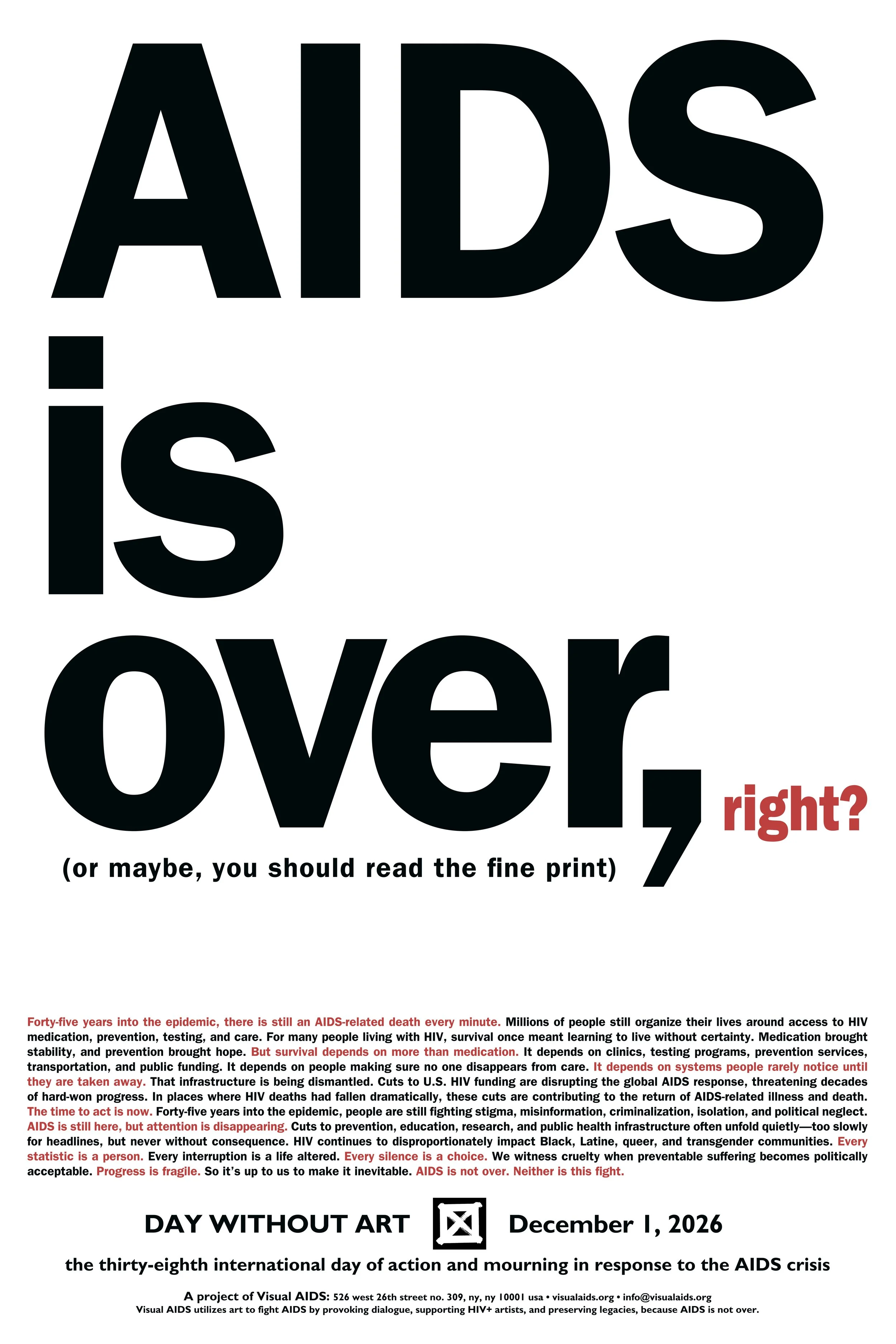
seeds in a dying colony
seeds in a dying colony will feature four newly commissioned short videos by artists from across the world: Edgar Hudson (Tanzania), Bruna Kury and Matheus Mello (Brazil/Spain), Sido Lansari (Morocco/France), and Micaela Cyrino (Brazil).
The program responds to a moment marked by deepening neocolonialism and mass desensitization to violent, preventable death, including recent spikes in HIV cases and deaths. Driven by cuts to international aid programs like USAID and PEPFAR, this resurgence reveals how access to care remains shaped by broader systems of U.S. and Western power that determine whose lives are protected and whose deaths are allowed to pass in silence.
seeds in a dying colony is an exploration of how systems organized around abandonment and premature death produce disconnection from the self and disruptions of memory, history, and cultural continuity. At the same time, movement, ritual, and beauty emerge as forms of recalibration, methods of reclaiming the body and reorienting toward life within conditions designed to constrain it.
The title of the program draws from the work of psychiatrist and political philosopher Frantz Fanon, whose writings on colonial violence and the racialized psyche have been taken up by some AIDS historians and theorists to understand how global health systems, formed through colonial rule, ultimately determine the order, quality, and conditions under which people receive healthcare, while also overwriting indigenous knowledge of healthy, embodied living. Rather than isolating HIV as a singular issue, seeds in a dying colony gestures toward the tension between systems of domination that appear enduring and the latent power and ancestral knowledge that remains in their undoing.
The artists in this program were selected by a jury of filmmakers who each selected an artist to mentor through their production process. The mentors of the 2026 program include Amil Shivji, Hiura Fernandes, Ésery Mondesir, and J Triangular.

Micaela Cyrino, How to project your voice without causing an earthquake, 2026. Commissioned by Visual AIDS for seeds in a dying colony.
Video Synopses
Edgar Hudson, There is an Elephant in the Room
mentor: Amil Shivji
A young person flees home after a life-altering discovery, carrying the weight of things that cannot be said out loud. He encounters an activist fighting to be heard and a care worker sustaining others through daily acts of survival. Through dance and movement, the film offers a quiet story of survival, exile, and return, asking what it takes to face the elephant that everyone knows is there.
Bruna Kury and Matheus Mello, Viral Borders: The Geopolitics of a Pandemic
mentor: Hiura Fernandes
A visual manifesto that transforms the HIV virus into a mirror of empire, where data, propaganda, and flesh collide. Through a frenetic digital collage, the film exposes the biopolitical machinery that controls the body and weaponizes borders against life itself.
Sido Lansari, ON A BRIGHT DAY (C'ÉTAIT UN JOUR LUMINEUX)
mentor: Ésery Mondesir
ON A BRIGHT DAY (C'ÉTAIT UN JOUR LUMINEUX) weaves together archival echoes, poetic fragments, and testimonies of Arab queer lives touched by HIV, spanning generations and geographies. Through the voices of the dead and the living, the film transforms silenced histories into a collective act of remembrance and resistance.
Micaela Cyrino, How to project your voice without causing an earthquake
mentor: J Triangular
Carolina lives alone in an apartment on the outskirts of São Paulo. Every morning she faces the city’s frenetic pace during the long commute from her home to work. In her thoughts, her grandmother’s wisdom always returns; in her headphones, it’s always the same rap. In her bag, she carries the book of recipes, baths, and blessings she inherited from her grandmother and the desire to end the day well.

Artist Biographies
Edgar Hudson (he/him) is a Tanzanian filmmaker and creative storyteller using art to spark dialogue on climate, identity, and social transformation. An alumnus of the MultiChoice Talent Factory and the Earthshot Youth Programme, he blends cinematic storytelling with advocacy, championing youth-led climate action and cultural consciousness across Africa. His work explores resilience, community, and the urgent need to reimagine our collective future through a more sustainable lens.
Bruna Kury (she/her) is an anarcho-transfeminist filmmaker, performer, and multidisciplinary artist whose work confronts structures of gender, class, and racial oppression. Her cinema challenges the dominant cis-heteronormative system through radical poetic resistance and collective creation. During the COVID-19 pandemic, she released two independent films produced in Germany: What If We Started to See Colonization as an Uncontrolled Infection of the Cis-tem? and Gentrification of Affections, both exploring decolonial perspectives and insurgent narratives. In 2025, she released Scorpionikas – Counter-Manifesto with MigrantaFilms, a transcontinental journey amplifying the voices of trans/travesti women, sex workers, and racialized communities through militant and experimental cinema.
Matheus Mello (they/them) is a filmmaker working between Brazil and Spain. Their work explores identity and migration, and they have collaborated in educational workshops with renowned filmmakers such as Lucrecia Martel, Pedro Costa, and Werner Herzog to support emerging talent. They have produced short films, a documentary, and video installations presented at major festivals including Tallinn Black Nights, Raindance, Sitges, IDFA, Rotterdam, and Zinebi. An alumnus of the Sundance Institute, Realness Institute Creative Producer Indaba, EGEDA Next Gen Film FinLab, and Jihlava Emerging Producers, Mello co-founded Migranta Films to create authentic, globally resonant stories across continents.
Sido Lansari (he/him), born 1988, Casablanca, is a multidisciplinary artist living between Paris and Tangier. A laureate of the École des Beaux-Arts de Lyon, he directed the Cinémathèque de Tanger from 2019 to 2022. His practice explores identity, gender, and sexuality through embroidery, photography, and film, delving into the silences and erasures of memory. In 2019, his short film The Last Paradise received the Grand Prize at the Festival Chéries-Chéris in Paris. His work has been shown internationally, including at the Institut du Monde Arabe (Paris), the Fondazione Sandretto Re Rebaudengo (Turin), and the Medelhavsmuseet (Stockholm).
Micaela Cyrino (she/her) is a multidisciplinary artist from Grajaú, São Paulo, Brazil. A painter, embroiderer, and performer, she holds a degree in Visual Arts from Santa Marcelina College. Her work explores the Black female body, memory, and ancestry, developing the idea of “drinkable memories.” HIV-positive since birth, Cyrino uses art to confront stigma and prejudice. She is a member of Trovoa and works as an art educator and consultant.